
Thiago Trevisan/IDG
Hot hardware is unhappy hardware, so where you place your PC's fans plays a crucial component part in how efficiently your precious components execute. This manoeuver will explain how to set up your PC fans for the best cooling performance—because you didn't substitute line for days to get your expensive new art posting just for it to thermal gas pedal, after all.
There are a hardly a important concepts that you should be conscious of when information technology comes to mise en scene up your various PC fans. Net ball's tackle them singly. The knowledge should flow in quickly—just like-minded the air in a well-configured system.
Flow of air direction
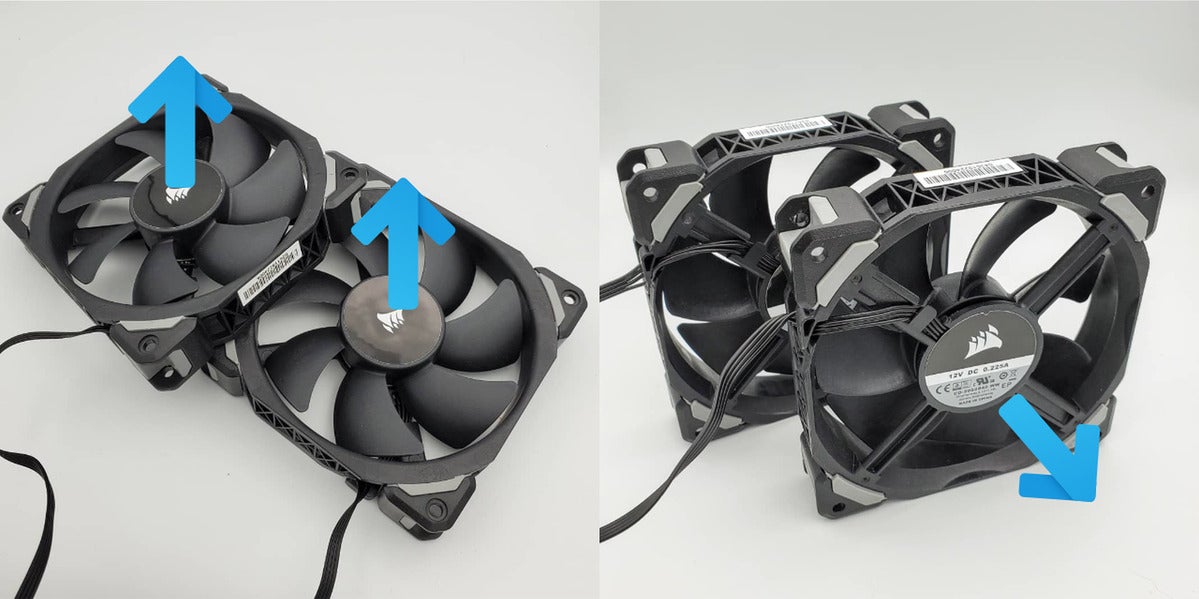 Thiago Trevisan/IDG
 Let's start with the bedroc. How you point your fans determines whether it sucks in cool breeze or spits sweltry air out of your system. Some fans will have an arrow indicating the correct flow direction. If they don't, a good rule of thumb is that air testament almost always flow in from the front, where the stigmatisation sticker generally is. Air exits out of the back, where the technical entropy may represent written well-nig the buff. Our guide to telling which way your PC fan is blowing tooshie help if you need it.
The type of fan matters too, though much less and then than having them all designed in the right way. Fans with higher static pressure are ideal for moving air through dim water-cooling system radiators. Fans with high airflow are great as intake or exhaust on your case as they keister move super amounts of aerial.
Positive vs negative flow of air
When fans pull in more air than they push out of a Microcomputer case, IT creates positive pressure. Negative pressure pulls more air out, often creating a vacuum force. For best temperature reduction performance in a standard system, you need to be slimly more on the positive airflow incline. (This setup usually results in more dust entering your PC, which you can mitigate with dust filters or more predominant cleaning.)
How do you accomplish positive airflow? Easy: Just have more intake than sap fans, operating theatre run your intake fans slenderly quicker than your exhaust if they'Re in isothermal number. Oral presentation of…
Intake vs exhaust
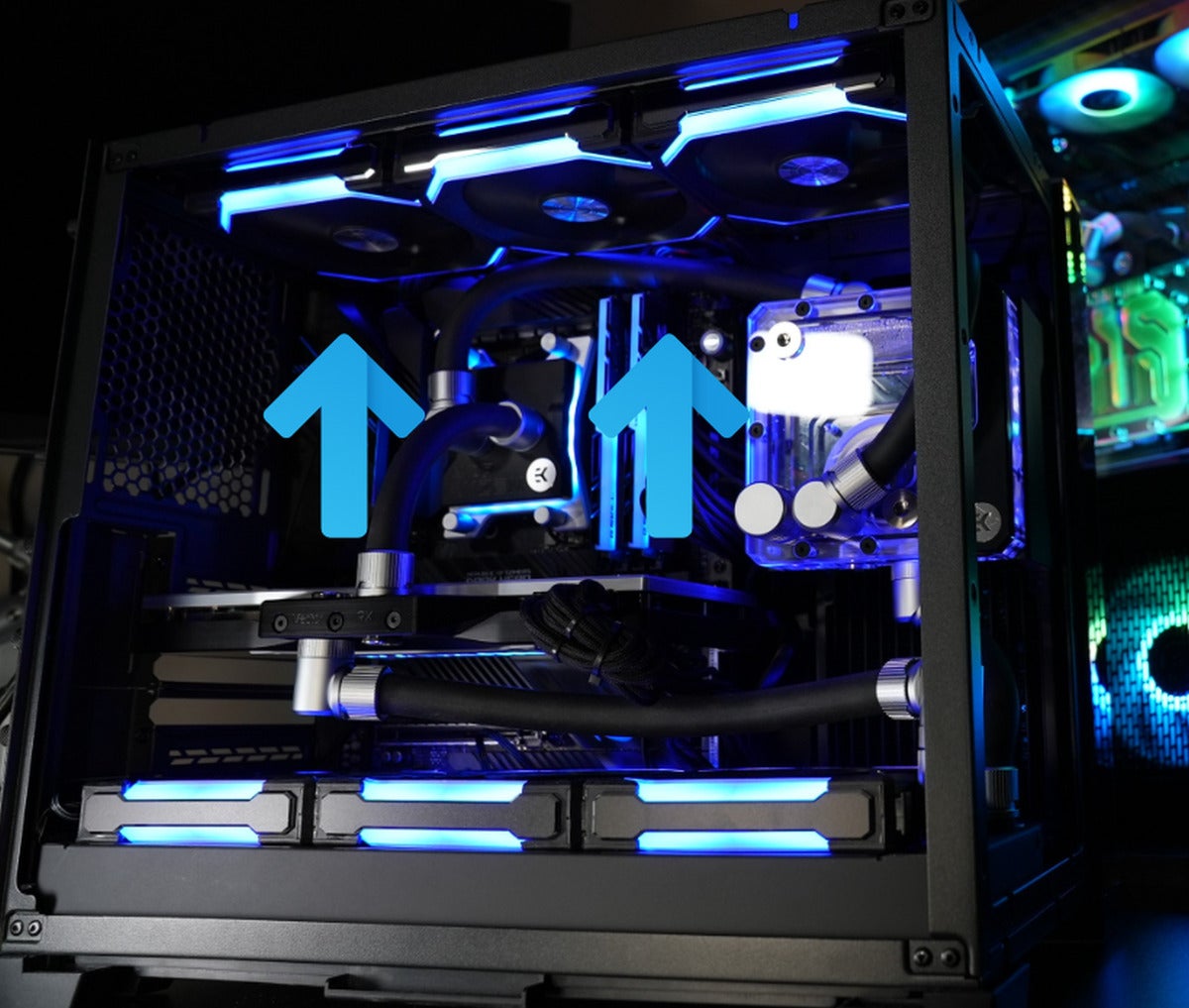
Intake and exhaust placements might be the uninominal most crucial concept for becoming fan placement. The idea is cordate: Fresh cool air in, hot vent. You generally want to have both uptake and wash up fans. (There can be exceptions to this, so much Eastern Samoa in small form factor in builds.)
 Thiago Trevisan/IDG
 Exercise A: Let's choose the popular Lian Li O11 Energising case. A solid fan contour would admit intake fans on the backside, and exhaust fans on top, as shown in the visualise to a higher place. Fresh air volition enter the case, cooling your components. Hot air generated past your hardware rises and will leave through the top exhaust fans.
 Thiago Trevisan/IDG
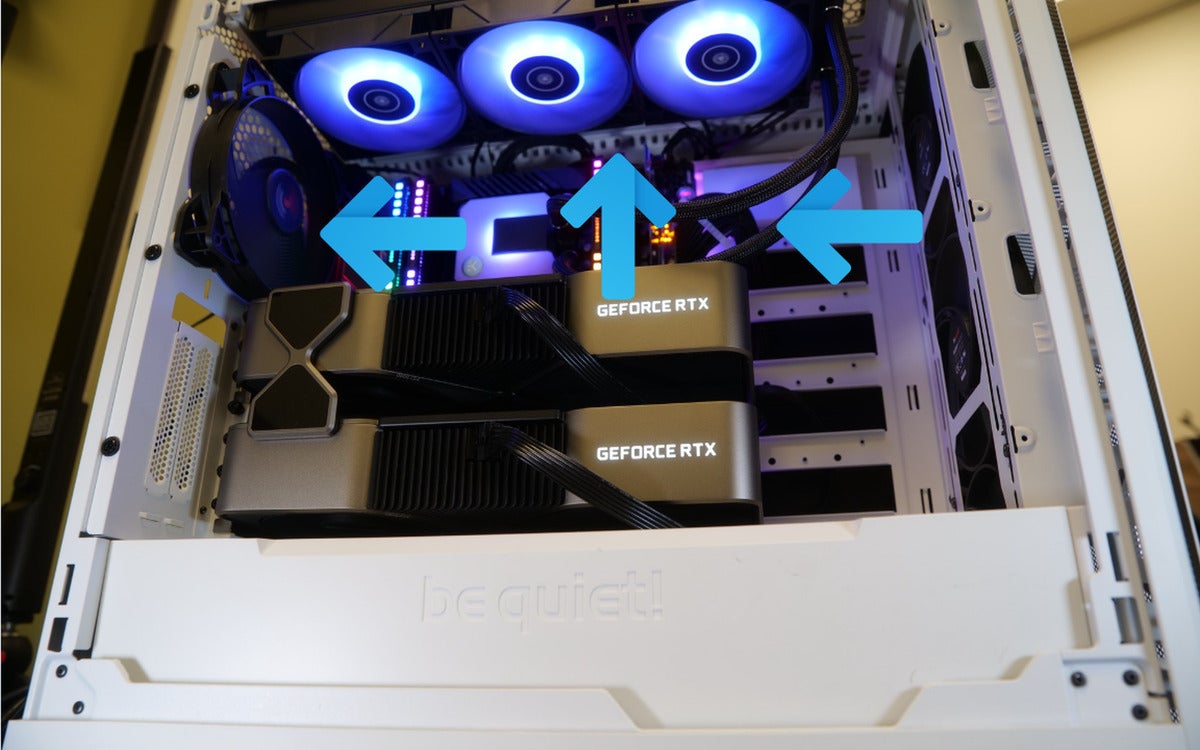
 For Example B, let's look at a much traditional case, the Be Quiet Silent Base 802. A best fan constellation would include intake fans on the presence of the case. You'll also want to add up the top exhaust fans. Including an exhaust fan on the backside of the case testament round out an optimal setup.
A configuration like that testament let cool air enter in the front, while the hot air from the CPU and GPU so exhausts on the peak and rear of the example.
In a standard desktop PC, you want at least unitary intake and one evacuate fan. Many cheaper cases only include a single uptake fan happening the front of the PC, or a single eat up fan at the rear. Spend a duo bucks for other fan so you cause both.
Push vs. pull for liquid coolers
 Thiago Trevisan/IDG
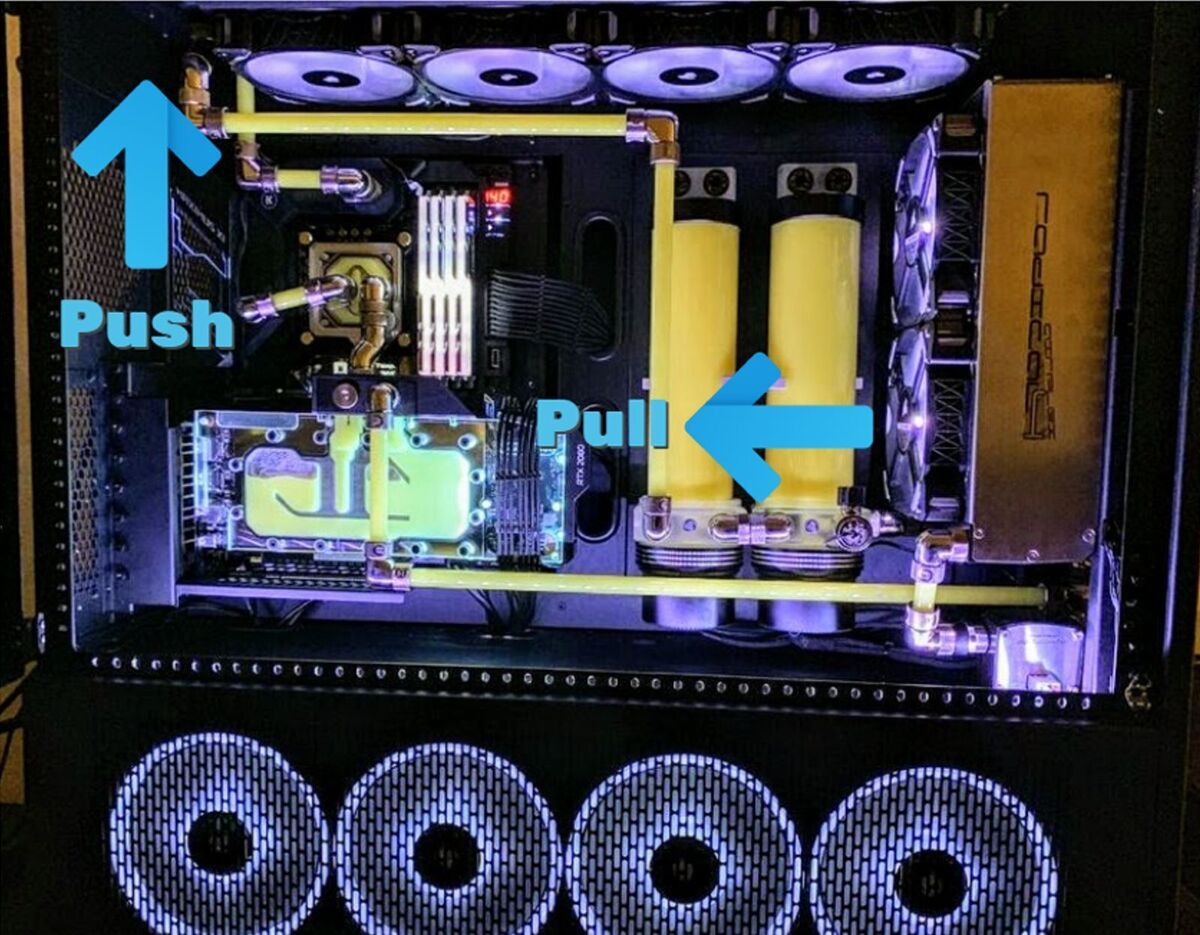
 Fans ordered at the front of your liquid-cooler's radiator with airflow going from front to backrest testament be "pushful" air into your system. If you flip the fans and put off them behind the radiator, they're now "pulling" air in through your liquifiable-cooler. (Like the picture to a higher place)
Which setup is optimal? Most tests show a negligible deviation in tug vs pull, but we derriere hand a slight nod to "push." Generally this will run best in most case setups, and hand out you efficient performance.
Case airflow and your CPU
AIO tearful ice chest: If you'Re cooling your CPU with an AIO, optimal setups include placing the radiator in the straw man Oregon top of your eccentric. Both work fair-minded fine. To prioritise the GPU cooling system, you'd place the CPU AIO on top of the instance as an exhaust. This will make the CPU slightly heater, but your GPU will stay cooler.
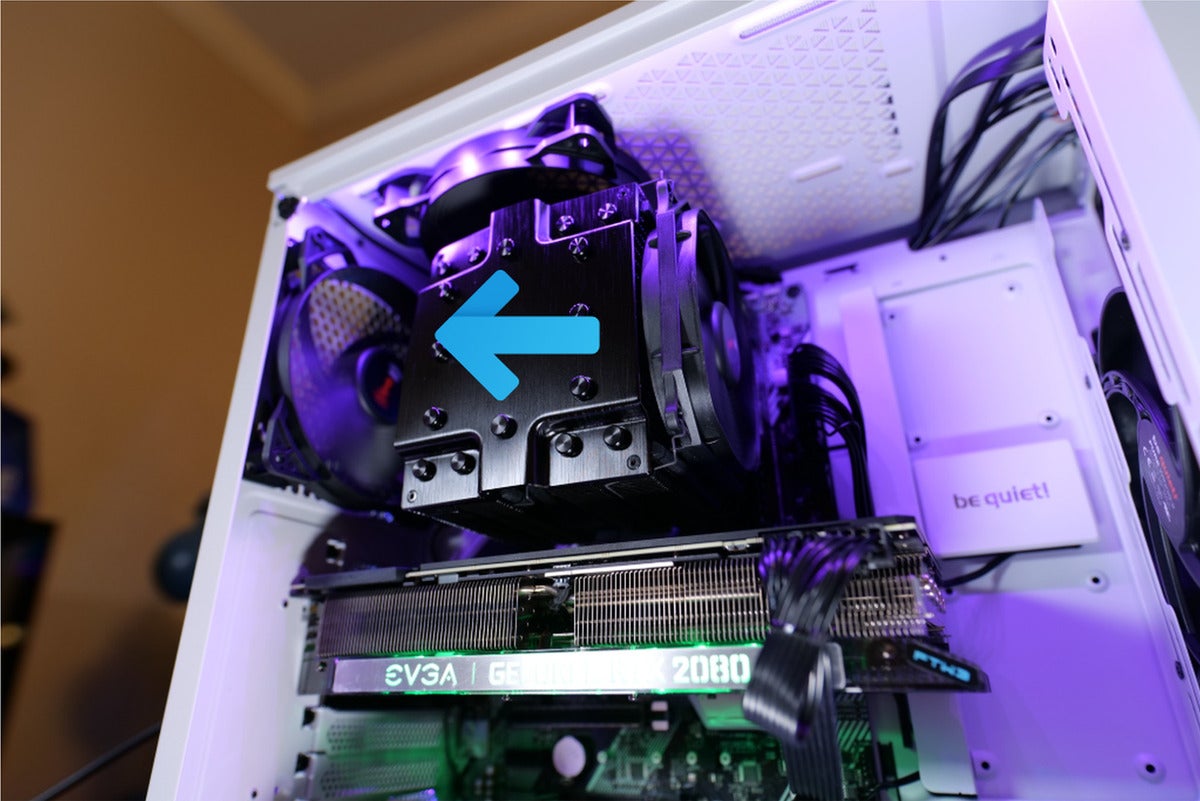
Tower publicize cooler
 Thiago Trevisan/IDG
 With a traditional tugboat ventilate cooler, you'd optimally want the fan located happening the cooler's heatsink pushing aura towards the rear exhaust of the case. In the example above, the open shroud GPU wish as wel exhaust sultry air upwardl—a typical frame-up for a gaming rig. This will slightly increment your CPU temperatures when using an air tank; you can reduce the heat levels with optimal sports fan flow of air.
How about your GPU?
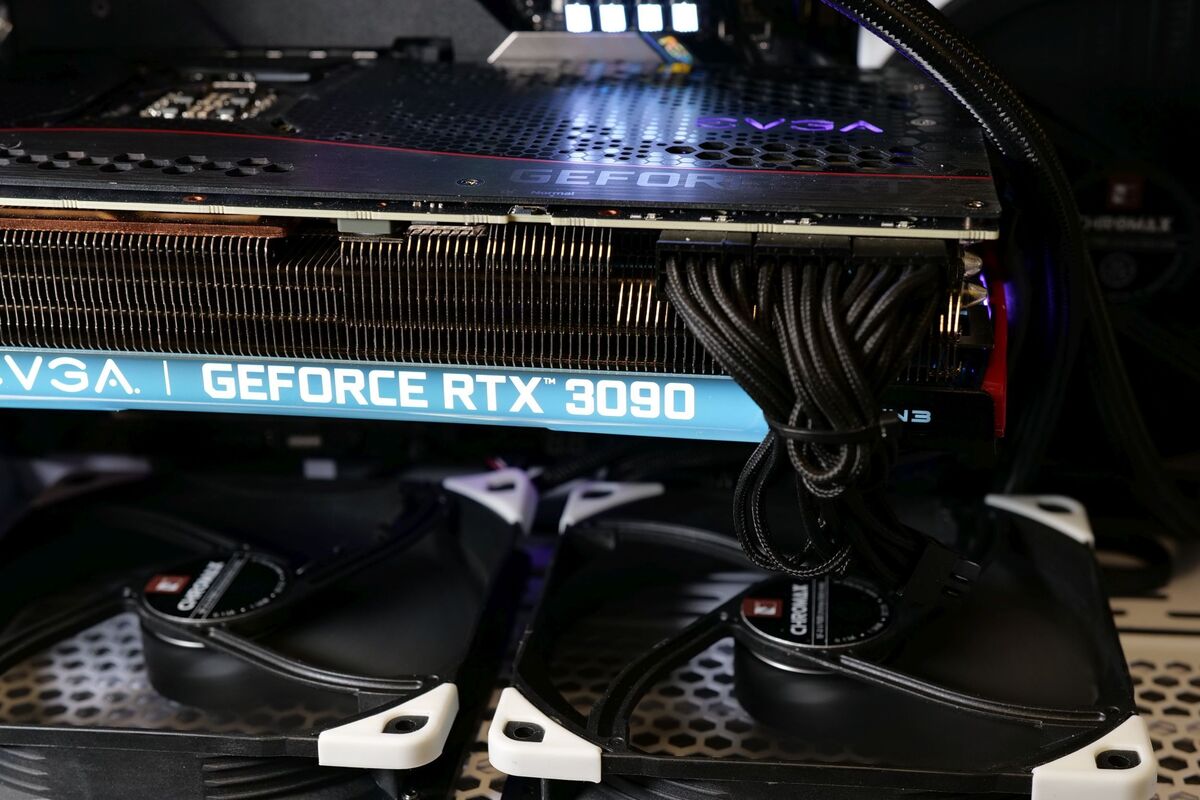
Measure open shroud GPUs exhaust a peck of hot air into your case—even more than your CPU if it's a powerful graphics card. What can you do to maximize cooling and airflow?
 Thiago Trevisan/IDG
 If your case allows it, install fans pushing air upwards towards your GPU on the bottom. This leave give stylish air directly to the consumption fans happening the GPU itself. If your case doesn't allow that contour, have a front consumption fan coupled with proper top Oregon rise exhaust fans, atomic number 3 delineated previously. Again: You always want at least one intake and one run down rooter in your scheme, and that goes twice if it's a gaming rig.
Rooter curves and case choice
There are two final important items to debate. First, case choice tail end aid tremendously in optimal fan airflow. Our explainer happening buying the idealized PC subject rump help, though you should be in force if you follow these general guidelines:
- Use a case with a mesh front. These will have much better air flow than cases with compressed-off or glass front panels. Examples include the Fractal Design Meshify series, and the Be Quiet Inexplicit Base 802 mentioned earlier.
- If you're using hot, mighty hardware, make sure to set out a sheath large enough to lodge in the necessary fans. If you want to stick to a smaller case, consider using liquid cooling for to a greater extent efficiency.
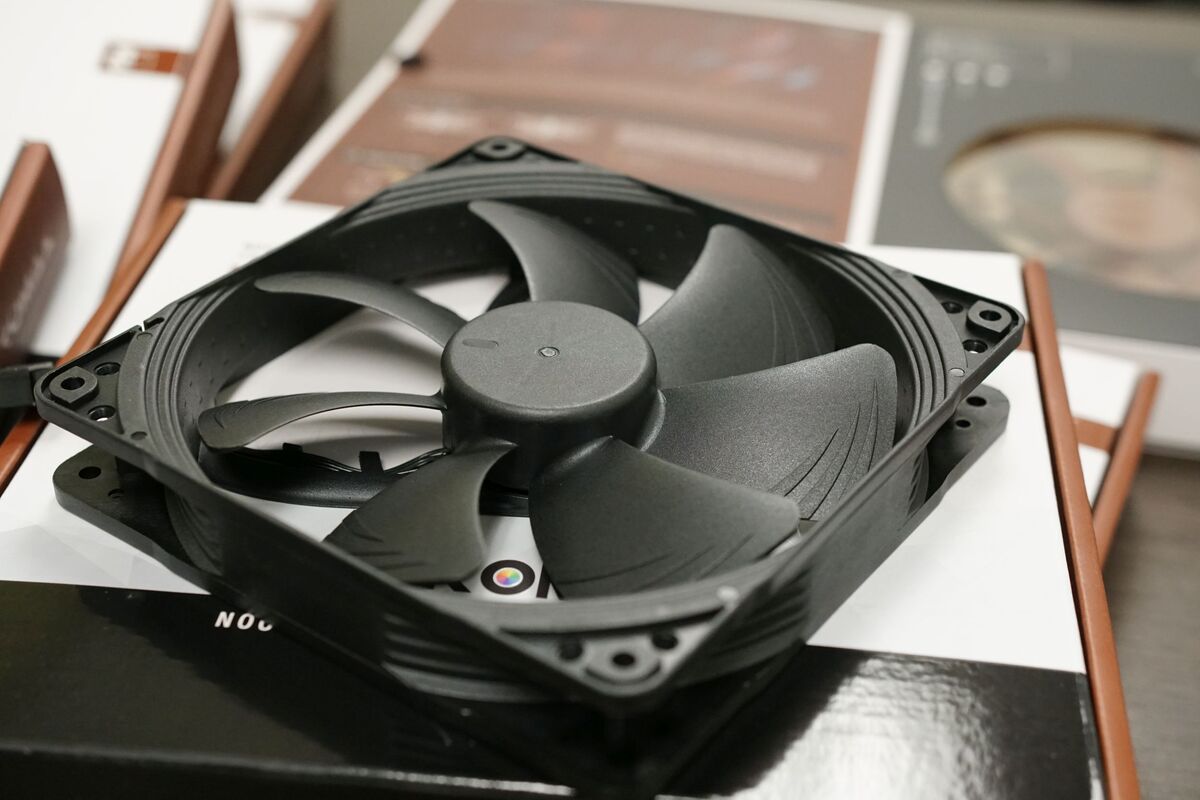
Second, utilize fan controllers to pinpoint the best noise to performance ratio that you rear get hold. Most midrange to squealing-end motherboards admit fan software either in their BIOS surgery as a Windows application program. Example of this is the Asus Ai Suite 3. You tooshie set your CPU and subject temperatures based on actual thermals, which john give you quiet performance. Likewise, the fans can ramp up when needed to hold sure everthing corset cold.
 Thiago Trevisan/IDG
 If you want more advanced control of your fan curves, hardware controllers from Aquacomputer, Corsair, and EKWB also exist that allow you to fine tune winnow curves even farther. You rear also base the fan speeds on the GPU OR use thermic sensors with these more advanced units, but they're overkill for most populate.
And there you have it: You straightaway know everything needed to optimally position your fans for the best cooling system performance. Our guides to checking your CPU temperature and your graphics identity card's GPU temperature can help you support everything is running swimmingly. May your temperatures be Sir David Low!
Note: When you purchase something after clicking links in our articles, we may earn a reduced commission. Read our affiliate link insurance policy for Sir Thomas More inside information.
Pc Case Fan Placement for Maxium Air Flow
Source: https://www.pcworld.com/article/394965/how-to-set-up-your-pcs-fans-for-maximum-system-cooling.html
Post a Comment